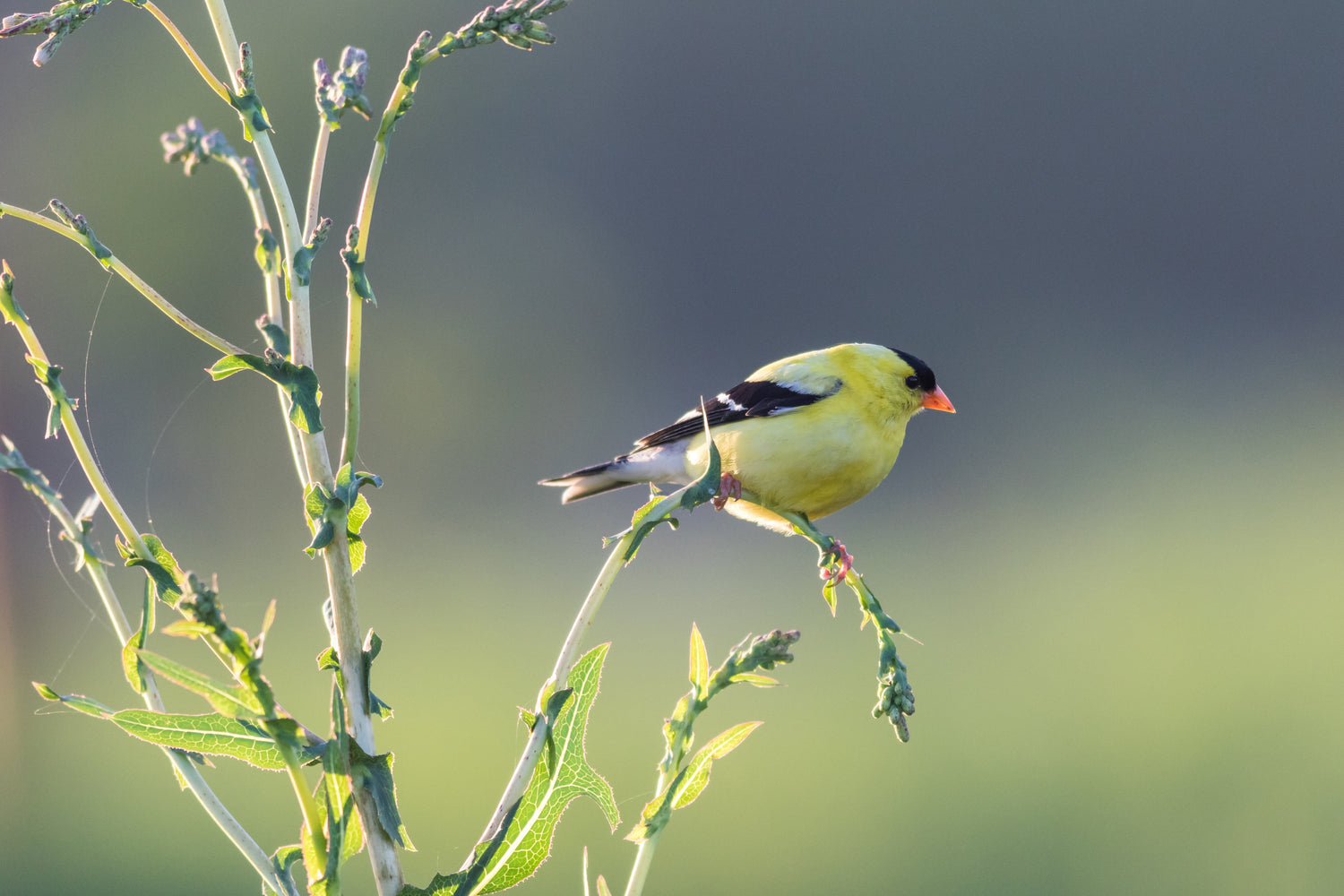
In a typical winter, seeing a flash of yellow at your feeder usually means an American Goldfinch has stopped by for a snack. However, 2026 is anything but a typical year. Due to the major finch irruption across the United States and Canada, many homeowners are being treated to a much rarer guest: the Evening Grosbeak.
Because both birds belong to the finch family and share a yellow-and-black color palette, they are frequently confused—especially when viewed through a window. However, when you see them up close through your Trail Optics 1080p Ultra HD camera, the differences become unmistakable. Here is how to tell them apart during their Q1 visits.

The Evening Grosbeak: The "Kernel Cracker"
The Evening Grosbeak is essentially a goldfinch on steroids. If you see a bird that looks like it spent the summer at the gym, it’s likely a Grosbeak.
- The Beak: Their most defining feature is their massive, heavy, conical bill. In winter, it is a pale, bone-ivory color (it turns sea-foam green in the spring). This bill is designed to crush hard seeds that smaller finches can't touch.
- The "Unibrow": Male Evening Grosbeaks have a striking, bright yellow stripe over their eyes that looks like a bold eyebrow against their dark, velvety heads.
- The Wings: Look for a large, solid white patch on the wings. When they fly, this looks like a bright white "flash" that is visible from a distance.
The American Goldfinch: The Drab Resident
While male Goldfinches are famous for their "electric yellow" summer feathers, they undergo a dramatic molt in the fall. By January and February, they are much more subtle.
- The Beak: Their bill is small, delicate, and pointed—perfect for picking tiny seeds out of thistles or Nyjer feeders.
- The Plumage: In Q1, Goldfinches lose their black caps and bright yellow bodies, replaced by a dull, unstreaked brownish-olive tone. They often look "patchy" as they begin their slow transition back to spring colors.
- The Wings: Instead of the solid white patches of the Grosbeak, Goldfinches have two thin, distinct "wing bars" on their dark wings.
Using Technology to Settle the Debate
Distinguishing between these two can be difficult during the "golden hour" or in low-light winter storms. This is where your smart feeder provides a scientific advantage.
1080p Detail vs. The Human Eye
The human eye often struggles with scale; a Goldfinch sitting alone can appear larger than it actually is. By reviewing your Trail Optics 1080p Ultra HD video, you can see the fine details that confirm an ID: the specific texture of the beak, the streaks on the flanks, and the exact shape of the tail notch.
AI "Second Opinion"
If you are still unsure, the Trail Optics AI identification feature analyzes the bird’s proportions and color patterns against a database of over 10,000 species. In an irruption year like 2026, the AI is a vital tool for documenting these rare Evening Grosbeak sightings for community databases like eBird.

Feeding for Both Species
If you want to keep both of these beautiful finches in your yard this February, variety is key.
- For the Grosbeaks: Use a platform feeder or the wide perches on your Trail Optics feeder stocked with Black Oil Sunflower seeds. Their large beaks make quick work of the shells.
- For the Goldfinches: They appreciate hulled sunflower (sunflower hearts) or Nyjer seed. Because they are smaller, they are often bullied away by the larger Grosbeaks, so having multiple feeding stations can help maintain the peace.
Capture Every Rare Visitor Don't let a "mystery bird" go unidentified this winter. Whether it's a common resident or a rare boreal traveler, the clarity of a smart feeder ensures you never miss a detail. Upgrade your backyard birding experience and start documenting the 2026 irruption today.
Shop Trail Optics 1080p Ultra HD Smart Feeders (Available on the Trail Optics Website or Amazon)

Leave a comment
This site is protected by hCaptcha and the hCaptcha Privacy Policy and Terms of Service apply.