Quick Facts: The Winter Fat Trade-Off
- Metabolic Cost: A small songbird can burn through 75–80% of its body fat reserves in a single winter night just to stay warm.
- Daily Deficit: To survive, birds must often replace up to 10% of their total body weight in fat every single day during the winter months.
- Internal Heating: Birds generate heat by shivering, a process that requires immediate, calorie-dense fuel like rendered beef fat (suet).
- Efficiency: Fat is an "express" energy source. Birds absorb it almost completely intact, making it far more efficient than seeds during a cold snap.
As we move through the heart of January, the natural world is at its leanest. The "easy" food—the autumn berries and the summer’s remaining seeds—has largely been exhausted. For the birds in your backyard, surviving the deep winter freeze is quite literally a race against the clock. By understanding the science of how birds stay warm, it becomes clear why that square cake of suet in your Trail Optics feeder is more than just a treat; it’s a critical lifeline.
The "Overnight Weight Loss" Challenge
To appreciate why high-fat fuel is so vital, you have to look at the numbers. A tiny Black-capped Chickadee weighs less than half an ounce, yet it maintains a core body temperature of about 105°F. When the air temperature drops toward zero, that little bird must bridge a massive temperature gap using nothing but its own internal metabolism.
During long winter nights, birds cannot forage. To survive, they enter a state of shivering that burns through their fat reserves at an incredible rate. It is estimated that many small birds lose 10% of their body weight overnight. Imagine a human losing 15 to 20 pounds of fat every single night just by sleeping—that is the metabolic reality your backyard visitors face every morning.
Why Suet is the Ultimate Winter Fuel
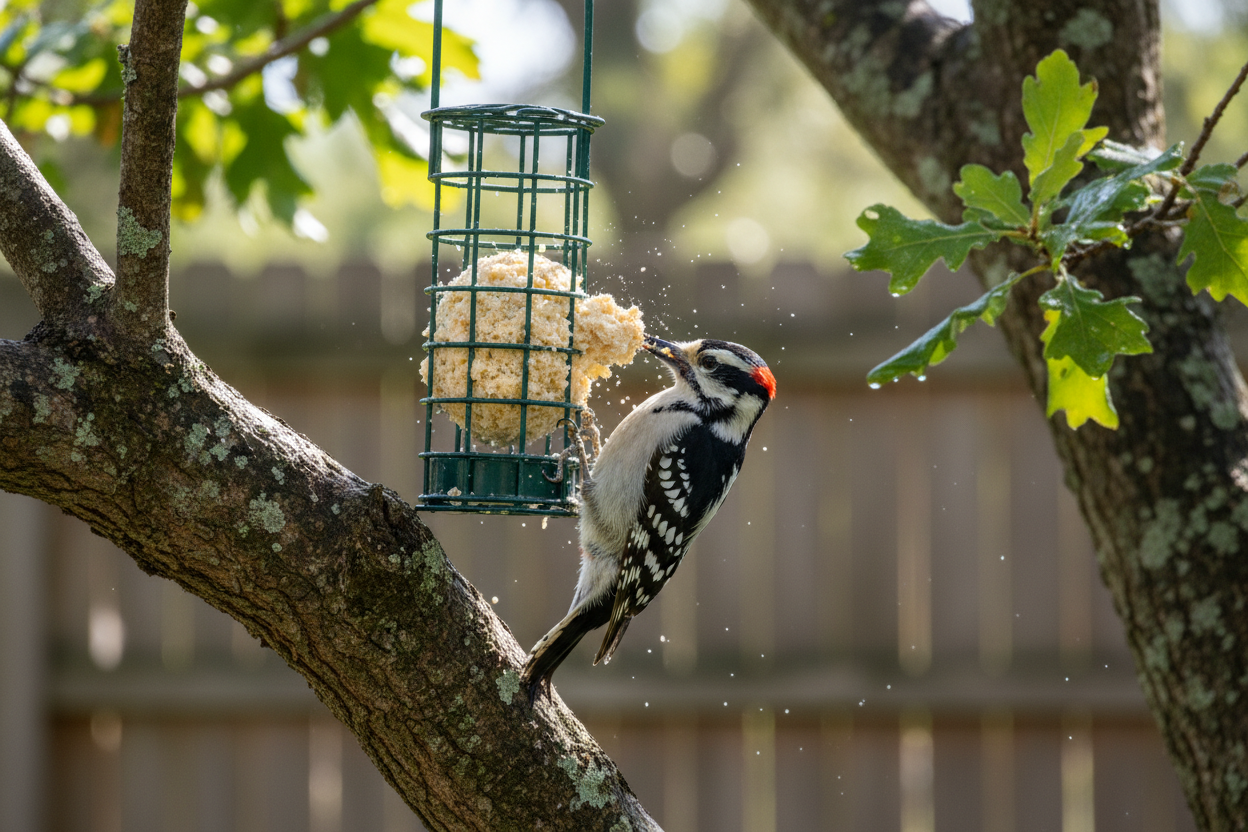
While seeds are great, suet (rendered beef fat) is the highest-density energy source a bird can consume.
- Concentrated Calories: Fat contains more than twice the calories per gram as carbohydrates or proteins.
- Easy Digestion: Unlike seeds, which require energy to crack and process, fat is absorbed almost immediately into the bird’s system.
- Thermal Efficiency: When birds eat frozen seeds, they have to use internal heat to warm that food up. Suet provides high energy with much less "thermal cost" to the bird.
Capturing the "Clingers" in 1080p
Using your Trail Optics smart feeder to monitor your suet station provides a front-row seat to some of the most specialized behaviors in the bird world. Suet primarily attracts "clinging" birds—Woodpeckers, Nuthatches, and Chickadees—who have evolved strong feet for gripping vertical surfaces.
With the 1080p Ultra HD clarity of your camera, you can observe the "hammering" technique of a Downy Woodpecker or the clever way a Nuthatch wedges a piece of suet into tree bark. These birds are often very protective of their suet because they know their survival depends on it.

Choosing the Right Winter Blend
Not all suet is created equal. During these freezing months, look for "High Energy" or "Winter Blend" cakes. These are often packed with:
- Peanut Hearts: For a protein kick alongside the fat.
- Mealworms: To provide the essential nutrients that insect-eating birds miss during the winter.
- Black Oil Sunflower bits: To attract birds that usually prefer seeds but desperately need that extra fat boost.
By providing a reliable source of high-fat suet, you aren't just watching nature; you are actively powering the "internal heaters" that allow these resilient creatures to make it through the winter and into the spring.
Fuel the Winter Flight Help your backyard residents win the race against the cold. Stock up on high-energy suet and watch the drama unfold in high definition. Every visit is a victory for survival.


Leave a comment
This site is protected by hCaptcha and the hCaptcha Privacy Policy and Terms of Service apply.