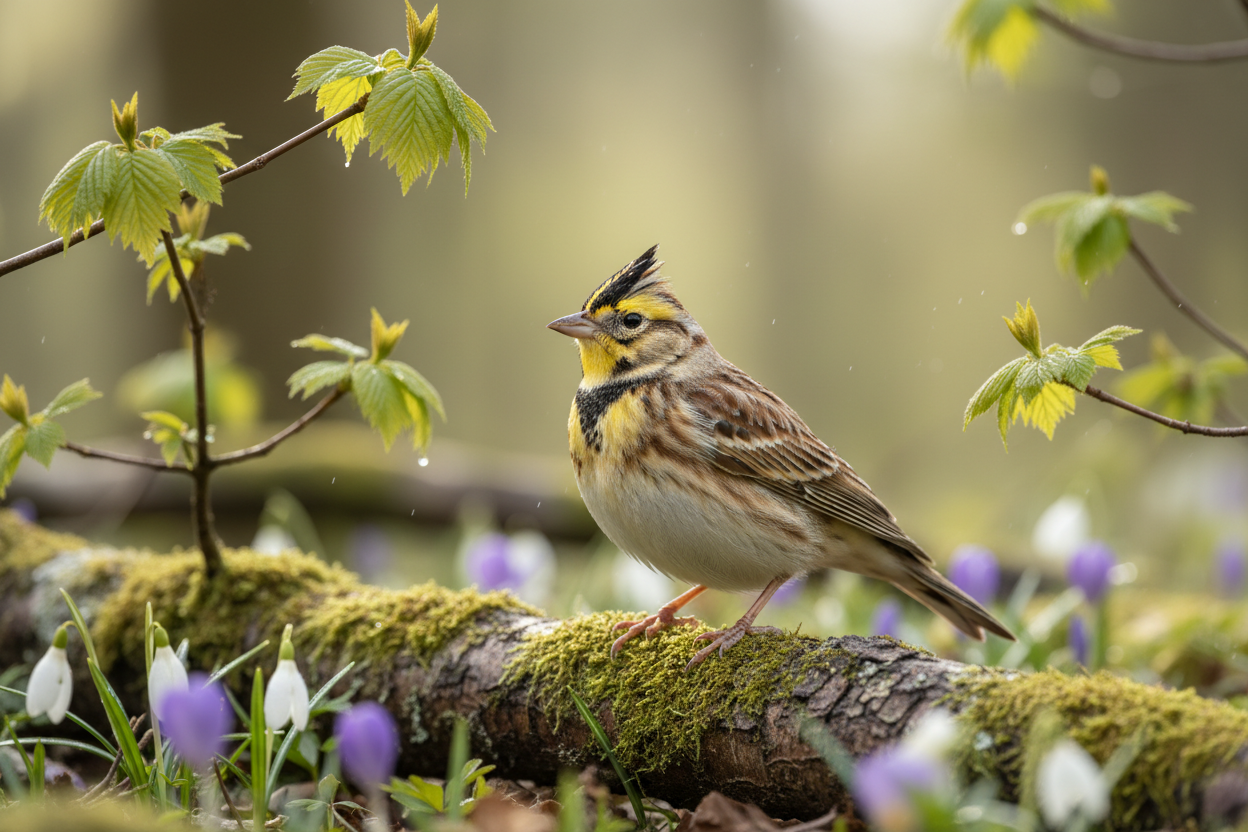
Quick Facts: The 2026 Bird of the Year
- Identity: The Horned Lark (Eremophila alpestris) is the only true lark native to the New World.
- Winter Strategy: They are social "nomads," forming large flocks that often mix with Snow Buntings.
- Ground-Dwellers: Unlike many songbirds, they rarely perch on branches, preferring to walk or run on open ground.
- Conservation: Selected by the ABA to highlight the importance of protecting fragile grassland habitats.
The American Birding Association (ABA) has officially named the Horned Lark as the 2026 Bird of the Year. While many past selections have featured flashy, colorful migrants, the Horned Lark is a celebrated "tough guy" of the bird world—a resilient species that thrives in the wide-open, often frozen landscapes of North America.
If you’ve been looking for a reason to check your Trail Optics 1080p Ultra HD "Guest List" more frequently this January, this is it. These birds are currently in their peak social phase, moving across the continent in search of winter forage. Here are 5 tips to help you spot this year's star on your smart camera.

1. Focus on the Ground View
Horned Larks are almost exclusively ground-foragers. You won't typically see them landing on the perches of your feeder; instead, they are the "clean-up crew" that patrols the area directly beneath it.
Pro Tip: Position your Trail Optics feeder so the camera captures a wide view of the ground or a flat mounting surface. Our 1080p Ultra HD sensor is wide enough to catch these fast-moving larks as they walk and run (rather than hop) across the soil.
2. Look for the "Royal" Mask and Bib
The male Horned Lark features one of the most striking facial patterns in the bird world. Look for a bold yellow face contrasted with a sharp black "mask" and a distinct black crescent-shaped "bib" on the chest. In the low, angled light of a January morning, these colors pop beautifully in high definition, allowing for easy identification even at a distance.
3. Spot the "Little Horns"
Their namesake "horns" are actually two tiny tufts of black feathers on the sides of the head. These can be raised or lowered and are most visible when the bird is alert. Because these tufts are small, they are often missed by traditional binoculars. The Trail Optics macro-focus capability allows you to see these subtle "winks from nature" that confirm you’ve found a true Horned Lark.
4. Provide the "Waste Grain" Menu
Horned Larks love open fields and agricultural "waste grain." To attract them to your yard, ensure you are using a high-quality seed mix that includes cracked corn, millet, or small sunflower hearts. As other birds scatter these seeds to the ground, the Horned Larks will move in to investigate the "spillage."
5. Watch for "Social Mixers"
In January and February, Horned Larks are rarely alone. They travel in "nomadic" flocks that can number in the hundreds. If you see a sudden influx of small, brownish birds on your camera feed, look closely—Horned Larks often "fraternize" with Lapland Longspurs and Snow Buntings. Checking your subscription-free AI identification will help you sort through these busy winter flocks in seconds.
A Symbol of Resilience
The Horned Lark was chosen for 2026 to remind us of the quiet beauty and "toughness" of our native wildlife. By hosting them in your backyard, you are supporting a species that is currently in a "steep decline" due to habitat loss. Every clip you capture and share helps raise awareness for these iconic grassland residents.
Join the 2026 Birding Celebration Ready to see the Bird of the Year in 1080p? The Horned Lark is waiting to be discovered in your backyard. Capture their unique behavior and share your sightings with the Trail Optics community—no monthly fees, just pure nature.

Leave a comment
This site is protected by hCaptcha and the hCaptcha Privacy Policy and Terms of Service apply.